
 |
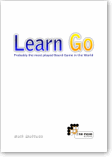
Learn Go (2nd edition) teaches Go with a focus on territoryNow a 6" by 9" format book with 141 pages of text and board diagrams.Rather than teach Go via the easy but misdirected route of focusing first on capturing stones, this book teaches the game as a whole board game of territory right from the start. It introduces capture and the need to make 2 eyes as a natural consquence of all board play. How to play chapter extended information : Page 13 and Page 17 Buy on Amazon.com for just $8.99 Buy on Lulu for just £5.99 |
||||||||||||||||||||||||
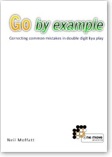 |
Go by example : Correcting weaknesses in double digit kyu playA 6" by 9" format book with 112 pages of text and board diagrams.This book is the result of extensive study of games on the KGS Go Server between playeres ranked 10 kyu to 20 kyu. It selects real life examples of weak play, explaining quite why they are weak and showing how to correct them. The weak play is sectioned into different categories, such as a failure to act upon a shortage of liberties. It should help double digit players move to single figures. Buy on Amazon.com for just $7.99 Buy on Lulu for just £4.99 |
||||||||||||||||||||||||
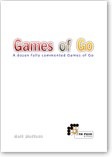 |
Games of Go provides 12 fully commented games of GoA4 (29cm x 21cm) format book with 224 pages of text and board diagrams in a 3 column format. Well over 3,000 diagrams.
Click on the hightlighted chapter(s) to read a sample of pages. |
||||||||||||||||||||||||
|
As of publication in Spring 2009, these books are different from all other Go books :
|

|